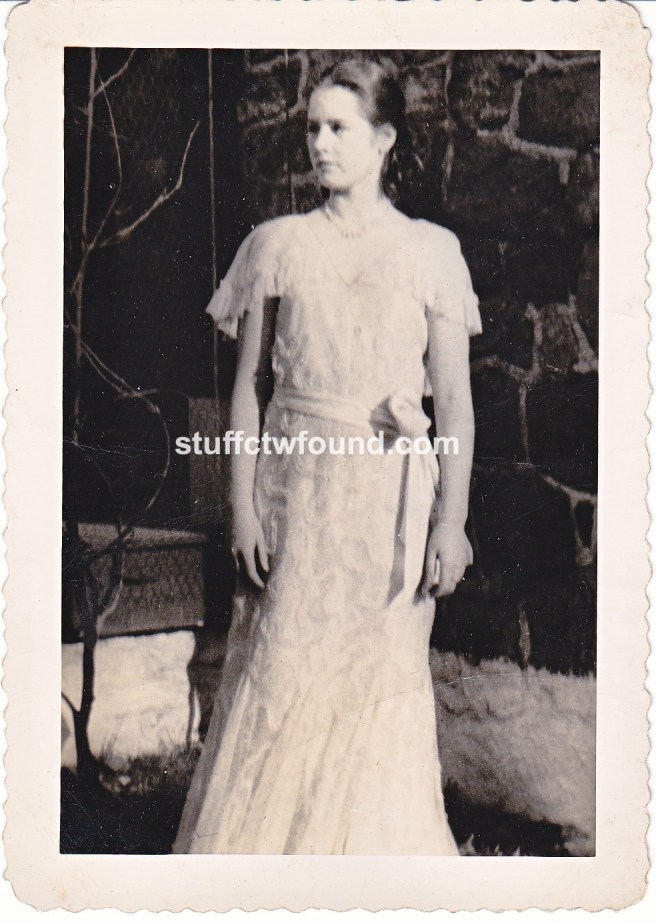
Daughters of Joshua Hood

I bought this batch of 12 photographs at an antique store on The Avenue in Baltimore’s Hampden neighborhood. The photographs appear to be duplicates of older photographs. Each one is contained in a cardboard folder measuring 3.25 x 4 inches with the logo “Pack Bros., 112 West Lexington St., Baltimore, MD” on the front. As best I can determine, the Pack Brothers, led by Walter Burton Pack (1870-1960), operated at that address, also known as the London Studio, from about 1904 to about 1908. Inside each of the folders is a handwritten note containing what biographical information was known to the writer. Each photograph’s caption quotes the note that came with it.

The following gentleman is Joshua Hood (1804-1890) who descended from a namesake who settled in the Howard County, MD area in the 1600s. He was born near Warfieldsburg, MD, the son of Benjamin Hood (1778-1848), a well-known Methodist Episcopal preacher, and Sally Wayman (1778-1864). Joshua is said to have introduced the Marquis de Lafayette to the people of Cooksville, MD and “played a prominent role at the grand ball at Annapolis given in honor of the Marquis” in December 1824 during the Frenchman’s 16-month-long tour of the USA. Joshua married Matilda Ann Haughey (1807-1866) of Delaware in April 1825. They had nine children that I found.

Emily Jane Hood father, __________ Hood

Next we have three photographs of Clara Hood Walker (1857-1918). Clara was the daughter of Samuel Theophilus Walker (1828-1901) and Emily Jane Hood (1830-1867). Emily was a daughter of Joshua Hood.

Clara Hood Walker, about 2 yr old, Mrs. Andrew Jackson Young
Clara Hood Walker, Born Nov. 4, 1857, about 9 yr old with cousin Edward Van Sant

The boy standing with Clara in the above photograph is Edward Van Sant (1858-1931), the son of Nicholson Van Sant (1817-1902) and Sally M. Hood (1826-1897), Sally being another of Joshua Hood’s daughters.

Clara Hood Walker, 28 yr old, Married Andrew Jackson Young, 48 yr. old, Nov. 4, 1885

Clara married Andrew Jackson Young (1837-1920) who was born in Baltimore, one of the eight children of William Scott Young (1801-1888) and Mary A. Dutton (1800-1887). William bought a farm in Abingdon, MD in 1837 and that is where Andrew grew up. According to William’s obituary, as a boy during the War of 1812 he “helped to throw up the embankments which are still reserved around Patterson Park, Baltimore.” William served as “a member of the revenue force under President Andrew Jackson” and held elective office in Harford County, MD as a member of the Native American Party. Andrew was affiliated with the Philadelphia, Baltimore, and Washington Railroad until he turned to real estate in the mid-1890s. At his death he had been the proprietor of the real estate firm A. J. Young & Company for about 25 years.

Andrew Jackson Young, about 18
Andrew Jackson Young, about 22 or 23
Andrew Jackson Young, b. 1837, son of Wm Scott Young & Mary Dutton, Wm S. Y. born Jan 1801, Mary Dutton b. Dec 1799

Clara and Andrew had three children: Eldridge Hood Young (1886-1957) who married Nadine P. Showell (1888-1959); Andrew Jackson Young, Jr. (1888-1965) who married Elizabeth Welsh van Sweringen Rhodes (1891-1970); and Emily Dutton Young (1891-1981) who married Harold Frederic Spiers (1894-1962). It was a big help to me that Andrew Jackson Young, Jr. was a member of the Society of Colonial Wars in the State of Maryland because the pedigrees of the society’s members are available on Ancestry.com.

The next photograph and its caption are mysterious. According to the note accompanying it, the subject is Matilda Hood, a wife of Benjamin F. Walker (1830-1899) who was a brother of the aforementioned Samuel Theophilus Walker, but Benjamin’s wives were actually Amelia D. Hood (~1836-~1864), another daughter of Joshua Hood, and Mary T. Harmer (1852-1893). The confusion may arise from Amelia having been a daughter of a Matilda and the mother of Matilda A. “Tillie” Walker (1855-1925). “Amelia W. Walker” is inscribed on Benjamin’s tombstone but without dates.

Matilda Hood, m. Frank Walker, Bro Samuel T. Walker, died when she was 28.

The note writer thought the lady in the next photograph is Ella Hood who married Samuel Burgess, but it was Ella M. Walker (1854-1943) who married Samuel French Burgess (1839-1906). Ella Hood (1851-1923), another daughter of Joshua Hood, married Joshua Warfield Baxley (1848-1910).

I think, Ella Hood, m. Samuel Burgess

Next up is William S. Young (1828-1892), the first son of William Scott Young and brother of Andrew Jackson Young. William was also born in Baltimore and raised in Harford County. He was elected Harford County, MD surveyor as a Democrat in 1853 and served in that capacity until he was elected county sheriff in 1867. He was admitted to the Harford County Bar in 1870 and “soon acquired a considerable reputation as a brilliant speaker and a quick, ready lawyer.” He married Mary Elizabeth Cochran (1828-1915). They had nine children who survived to adulthood.

William Young of Bel Air, eldist child of William Scott Young and Mary Dutton

Finally, the following photograph had no note. Could this be William Scott Young?

(This one had no note.)

Below is what the notebook containing each photograph looks like.

I originally wrote the blog with a focus on Andrew Jackson Young and Clara Hood Walker because they were the subjects of the majority of the photographs.. I re-wrote the post when I realized the actual theme should be the daughters of Joshua Hood.

An Unusual Personal Attraction

Juliana Brent Keyser

According to the inscription on its back, the subject of the above photograph is Juliana Brent Keyser (1891-1975). I think the style of her hat dates the photograph to around 1910. When Baltimore newspapers still had “social pages” they followed every move of the debutante and her family.

Her father was Robert Brent Keyser (1859-1927) who was a president of Johns Hopkins University‘s Board of Trustees and oldest son of Baltimore industrialist William Keyser (1835-1904) who, along with his cousin William Wyman (1825-1903) and others, helped establish the university’s Homewood Campus in the early 20th Century. Her mother was Ellen Carr McHenry (1860-1946) who was a great-granddaughter of both John Eager Howard (1752-1827) and James McHenry (1753-1816) for whom Fort McHenry was named. Juliana was possibly named after her great-grandmother Juliana Elizabeth Howard McHenry (1796-1821) and her grandmother Mary Hoke Brent Keyser (1838-1911). Her only sister was Ellen McHenry Keyser (1892-1980) who married James Cabell Bruce (1892-1980). Her only brother was William McHenry Keyser (1897-1928) who married Marjorie Hambleton Ober (1900-1977) before his early death as the result of an automobile accident.

The Keyser family’s town home was located at 1201 North Calvert Street in Baltimore. The announcement of its sale after her father’s death in 1927 said the house “occupies a lot of 38 by 133 feet” and “contains four stories and thirty-two rooms, with eight baths, and an electric elevator.” The property is currently listed as nearly 12,000 square feet. The family’s country home, nearly always said to be “in the Green Spring Valley,” was Dunlora, later called Merry Hill, located in what is now the Anton Woods development in Baltimore County. According to Census records, in 1900 the family had nine servants; in 1910 the family had five servants; in 1920 the family had two maids and a butler.

Her parents “introduced” Juliana at a reception held at their town home in December 1910. The Baltimore Sun article about the reception described her as “one of the most important debutantes of several years, combining as she does birth, wealth, position, an unusual personal attraction.” December, January, and February of 1910 were filled with receptions, dances, a bal poudré, and in each announcement the setting and her clothing were precisely detailed. Several articles described her “surgical operation for appendicitis” at Johns Hopkins Hospital in November 1911. The family’s travels, domestic and foreign, and the annual moves between houses, were meticulously reported.

Juliana and Gaylord Lee Clark (1883-1969), a Baltimore assistant state’s attorney, announced their engagement at a “german” in February 1921 and The Baltimore Sun described the occasion this way: Juliana Keyser and Gaylord Clark simply “made” the dance by announcing their engagement. Everyone, of course, had noticed Gaylord’s attentions, but both he and Juliana have had so many admirers that nobody felt called upon to make any remarks in this case. That sentence is not as crazy as it sounds, for Gaylord had caused many a feminine heart to flutter, both here and elsewhere, and Juliana is not the sort of girl to care for a man whom no one else could see on the earth.

Gaylord and Juliana were married in April, 1921. He was born in Mobile, AL to Gaylord Blair Clark, Sr. (1846-1893), a lawyer who had been a member of the Virginia Military Institute Corps of Cadets who fought at the Battle of New Market on 15 May 1864, and Lettice Lee Smith (1855-1914). Gaylord had a distinguished military career like his father, serving in Maryland’s 5th Regiment during the Mexican Border War and as a company commander in the 29th Division during World War I when he was cited for gallantry under fire two times during October 1918. During World War II he was executive officer of the Maryland State Guard with the rank of colonel. After the war he joined the law firm of Semmes, Bowen, and Semmes and became a partner in 1935. He served as president of the Family Welfare Association was named state parole commissioner in 1932.

There is a lot more to know about Juliana than there is about the usual subjects of this blog, so I’ll end with a jumble of interesting tidbits. She was educated at Calvert School, Bryn Mawr School, and Miss Porter’s School. She served as a volunteer and leader of Planned Parenthood in the 1930s and remained interested in the organization all her life. When the Junior League of Baltimore was established in 1912 Juliana served as its first president until 1916. She helped organize the 1920 Lecture Club and hosted its first meeting in November 1919 where the English novelist Hugh Walpole was the speaker. In April, 1914 she hosted “about four hundred modishly dressed young women of the ‘leisure class'” who heard the evangelist Billy Sunday urge them to “leave behind something more than an obituary notice in a newspaper and a piece of black crepe floating on the door.” English miniature portraitist Charles James Turrell (1846-1932) produced “an especially fine likeness” of her in 1922. It was Juliana’s “unflagging efforts” which led to the establishment on the Homewood Campus of memorials to her grandfather William Keyser and great uncles Samuel and William Wyman, efforts which resulted in the naming of the Keyser Quadrangle and the Wyman Quadrangle.

To learn more and see a description of the Keyser-Wyman papers, look here.

Reverse of the Photograph

Three Baltimore Ladies

Mary Ann Jessup Clemens Aul

The above photograph depicts Mary Ann Jessup Clemens (1846-1930). Born in Baltimore, she was the daughter of Augustus Ducas Clemens (1817-1897) and Henrietta Matilda Bryden (1812-1900) who married in 1841. She served as Grand Deputy for Maryland of Ladies of the Golden Eagle, the female auxiliary of the Knights of the Golden Eagle of which her husband served as Supreme Chief. During 1889-1922 she conducted dozens of real estate transactions that were recorded in local newspapers.

Henrietta was the daughter of William Bryden (1767-1840), a ship captain who was born in Edinburgh, and Elizabeth Goodman (1769-1839) who was born in London. William’s brother, James Bryden (1761-1820), was a proprietor of the Fountain Inn which stood on Light Street between West Baltimore and Redwood Streets until 1871. Henrietta was born and grew up on the family place which was located south of East Biddle Street between North Kenwood Avenue and Edison Highway. The site was later St. Alphonsus’ Cemetery until that was abandoned and industry took over.

Augustus was known as Augustus, Sr. because the was the first of his line born in the U.S., but he is sometimes identified as the fourth. His father, also Augustus Ducas Clemens, was thought to be a captain in the French fleet during the American Revolution. According to an obituary (pdf) printed in The Baltimore Sun of 25 September 1897, Augustus “laid off” the villages of Friendship and Oxford in 1868 “on what was then known as the Quaker lots.” Oxford and Friendship are now part of of the Better Waverly neighborhood on the east side of Greenmount Avenue between 25th and 29th Streets, and what is now known as Lock Raven Road was then known as Quaker Road. There is a Friendship Street in the vicinity but no easy-to-find sign of Oxford. In 1845 Augustus was appointed “agent to the city of Baltimore . . . to collect DONATIONS to erect a NATIONAL EQUESTRIAN STATUE, of imperishable Bronze, at the U. S. Seat of Government, to the memory of Hero and Patriot, ANDREW JACKSON.” The statue of President Andrew Jackson was installed in Lafayette Park across from the White House in 1853.

Mary married Jacob Henry Aull (1847-1921) in 1883 and they had one child, Herbert Walter Aull (1872-1961). Their house, Eagle Nest, was on a large lot on the northwest corner of the intersection of 25th Street and Greenmount Avenue. Jacob was also a real estate man and he sold insurance. He was a member of Fellowship Lodge 138, Independent Order of Odd Fellows, and at the time of his death was the oldest past president of the Knights of the Golden Eagle. Jacob was the son of German-born parents, shoemaker Jacob Aull (1804-1876) and his wife Christiana Gusema (1812-1880). Jacob published a fine little book titled Old Land Marks which I enjoyed seeing in the Maryland Department of the Enoch Pratt Free Library (call number F190.7 .W3 A8). The book contains 37 photographs and descriptions which are listed here (pdf). It would be great if someone decided to reprint the book.

Eagle Nest, the Residence of Jacob Henry Aull and Mary Ann Jessup Clemens which became Adelaide Hall, a Boarding Home for Girls, and the Southern Hospital (The Baltimore Sun of 30 May 1912)
Helen Mary Bordley, AKA “Augie”

Pictured above is Helen Mary “Augie” Bordley (1871-1953). I found no explanation for the nickname Augie. She was the daughter of William Clayton Bordley, Jr. (1831-1897) and Laura Fitzgerald (1843-1886). William was a teller at the National Mechanics’ Bank until he resigned because of ill health and was appointed to the Baltimore tax department. Laura was a niece of Richard B. Fitzgerald (1807-1869) who was a sea captain and owner, with his half brother Washington Booth (1814-1892), of the Fitzgerald, Booth & Company, an international mercantile and shipping house based in Baltimore.

Census records all list Helen’s occupation as “none” or leave the section blank, but newspapers accounts show she conducted more than a dozen real estate transactions between 1921 and 1941. From at least 1900 until her death Helen lived with the family of her father’s sister, Mary Bordley (1852-1928), who married Augustus Ducas Clemens, Jr. (1845-1909), brother of Mary Ann Jessup Clemens Aull who is the subject of the photograph at the top of this page. Most of that time was at, or in the vicinity of Evesham (pronunciation), a 23-room stone mansion on a 56-acre estate located on what is now Dartmouth Road in the Evesham Park neighborhood. Augustus, Jr. bought the estate 1895 for $40,000. Augustus, Jr. intended to develop the land from the beginning but the mansion survived until 1961. The mansion’s carriage house was converted to a residence and remains there on a small lot on Dartmouth Glen Way. Look here (pdf) for a story about the Clemens family and Evesham, and here (pdf) to learn how Augustus, Sr.’s grandson, Bryden Bordley Hyde (1914-2001) used parts of the mansion to construct a home on Gibson Island, MD

Lydia McGee

Above is Lydia McGee (1848-1928) who also was a boarder with Mary A. J. Clemens Aull and family from around 1898 until her death. A death notice (pdf) identified her father as Robert L. McGee, but I think this Robert was actually her brother. Her parents appear to have been James McGee, born in Scotland in 1812, and Ellen Wright, born in England in 1819. James’ profession is “Bleacher” in the 1850 Census of Baltimore County, MD, and his sons followed him into this industry. This, along with other tidbits of information, indicates that Ellen was the sister of three brothers who established the Rockland Bleach and Dye Mill in Rockland, MD in the 1830s. The enterprise remained in the family until the 1940s and survives today as Rockland Bleach and Dye Works, a division of Rockland Industries, now known as Roc-Ion.

Lydia was a teacher all her life. A January 1874 newspaper account places her at Waverly High School on York Road. The school opened the year with 125 students and had 230 students by mid year. By 1881 Lydia was at the English-German Annex School #12 which educated 333 pupils that year. In 1914 she was honored (pdf) by former pupils as one of six surviving teachers at “the old Baltimore County School No. 13, which was started as a parochial school of St. John’s German Lutheran Church, Catherine and Lombard Streets, in 1872.” Her uncle Thomas Wright (1811-1900) bequeathed her two bonds of the City and Suburban Railway Company of $1000 each ($2000 = about $60,000 in 2019 dollars). Lydia also bought and sold real estate.

The following are the backs of the above photographs.

Back of Photograph of Mary Ann Jessup Clemen
Back of Photograph of Helen Mary Bordley
Back of Photograph of Lydia McGee

I spent more time reading and learning, finding graves and documenting them, and driving around looking at stuff than I did writing this time. Usually I’m looking for a little interesting information on a subject, but this time the amount of information on these families was overwhelming. I collected more than 150 newspaper articles. If you are curious about something you read here, drop me a line–I probably know the answer to your question or can find it.

I am most indebted to Suzanne LNU, the author of the excellent website Descent By Sea which discusses the genealogies of the Clemens and Bordley families, among others.

I am also grateful for the help I received from Mimi at the Roman Catholic Archdiocese of Baltimore who helped me track down the location of Helen Mary Bordley’s grave, a critical bit of information that helped figure out who Helen was and where she came from.

Alice Lydia Gilbert Siddall Stray

Alice Lydia Gilbert Siddall Stray

This photograph of the lovely Alice Lydia Gilbert was in a pile at an antique shop in the Hampden neighborhood of Baltimore. On the back someone had written her name, “Alice Gilbert Siddall” and there was a stamp from Brown Photo Service, Minneapolis, MN with the date 7 February 1945.

Who was she and how did her photograph get from Minneapolis to Baltimore? My first tools, ancestry.com and findagrave.com were no help to me. I was looking in MN, for one thing, and combinations of what were apparently two last names got me nowhere. But google.com brought up one hit on the name as shown: An item in the Chester County (PA) Law Reporter of 21 May 2015 concerning her estate listed her name as “STRAY, Alice G., a/k/a Alice Gilbert Siddall Stray, late of Exton, Chester County, PA.” We were on our way.

Alice was born in Chester County, PA, in 1915 and lived there all her life until she died in 2015. According to her obituary, available on her findagrave.com memorial page, she had a long career as an elementary school teacher and was deeply involved in the civic life of her community. Alice survived two husbands, John Edward Siddall (1913-1984), whom she married in 1938 and with whom she had two sons, and Carston Sigvald Stray (1906-2003).

She graduated from West Chester State Teachers College in 1936. Her profile in the yearbook, The Serpentine, listed her nickname as “The Mill” (her father was a miller all his life) and her “Feature: Conscientiousness and domesticity.” Here is her photograph in the yearbook:

Alice yearbook head shot 1936

I ran across some society page articles which demonstrated a relationship between her parents and some Flickingers. I blogged about a photograph of Walter Flickinger in November 2015. Both photographs were purchased at the same antique shop, so perhaps they originated from the same estate.

I never was able to discover what she was doing in Minneapolis in 1945. She appears to be dressed in formal attire, so maybe someone was getting married.

Alice Lydia Gilbert Siddall Stray back